


Global Hard-Rock Metallurgy Intel
Breaking the Grinding Bottle-Neck: How Modern Concentrators Cut Ball Mill Energy by 30%
Published: May 24, 2026 | Category: Base & Precious Metal Processing
As underground metal mines hit deeper, increasingly complex ore bodies this year, metallurgical engineers face a universal challenge: skyrocketing electrical utility rates tied straight to primary wet grinding circuits.
In traditional base metal concentration loops, crushing plants typically drop run-of-mine ore down to 12mm or 20mm before feeding heavy wet ball mills. This leaves the ball mill to perform massive volumetric size reduction, an operational step that consumes up to 50% of a plant’s entire energy budget. Furthermore, forcing high-impact machinery to handle hard **Scheelite**, **Chalcopyrite**, or **Au-Bearing Pyrite** yields chaotic particle distribution—leading to over-crushed fines that fail to attach to flotation bubbles.
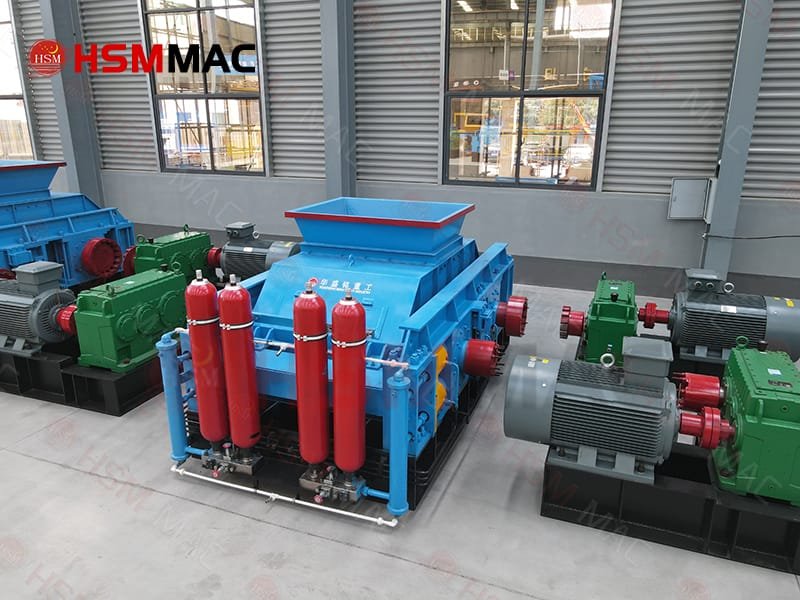
Double Roller Crushers
The ‘More Crushing, Less Grinding’ Operational Philosophy
To bridge this cost gap, leading mining syndicates are fundamentally shifting their flowsheet layouts. By integrating high-pressure **Hydraulic Double Roller Crushers** directly as a tertiary or quaternary fine-crushing vehicle, the feed size destined for the ball mill is constricted tightly to a uniform 0–3mm spectrum. This strategic reduction unloads massive stress from the grinding circuit, instantly increasing the plant’s daily throughput capacity.
“By compressing our copper-gold ore down to a calibrated 2mm matrix using high-force static rollers instead of dynamic cone hits, we completely bypassed the ball mill’s coarser stage. Our overall plant power draw fell by nearly a third, while our wear-liner replacement intervals doubled.”
— Operations Director, Pan-American Precious Metals Refining Corp
Systemic Advantages Redefining Downstream Milling:
The immense planar pressure applied inside the roller gap generates severe internal stress micro-cracks inside individual rock grains. These pre-weakened particles shatter effortlessly during subsequent wet ball mill cycles, saving substantial milling hours.
Unlike high-speed impact pulverizers that smash fragile minerals into unrecoverable mud-powder, static roller extrusion breaks material precisely down to the set hydraulic gap setting, maintaining a safe, highly-floatable size range.
Outfitted with advanced tungsten carbide studded roller matrices, these units process ultra-hard formations up to Mohs 7.5 hardness without undergoing the rapid abrasive wear that destroys standard hammer or cone liners.
Optimize Your Plant’s Grinding Energy Efficiency
Connect with our hard-rock processing engineering desk today. Provide your ore hardness, abrasive profile, and feed capacity to calculate your precise utility cost reduction.