


This article provides a comprehensive overview of the material versatility of double roll crushers, explaining why medium-hard and brittle materials yield optimal performance while high-hardness ores can be processed using specialized wear-resistant configurations. It details standard material categories across aggregates, cement, mining, and solid waste recycling, alongside three golden rules for feasibility assessment and critical operational boundaries regarding moisture, feed size, and metal impurities.
One of the most frequent questions from mineral processors and aggregate producers is: What materials can a double roll crusher actually process? The direct answer is: A remarkably wide variety. The core guiding rule is straightforward: medium-hard and brittle materials deliver optimal crushing efficiency, while high-hardness ores can also be handled effectively when paired with specialized wear-resistant configurations evaluated against specific operating conditions. Materials such as limestone, coal, glass, calcite, river pebbles, coal gangue, gypsum, and shale represent standard applications. Huashengming (HSM) double roll crushers support empirical material trial testing—determining whether your material can be successfully crushed and how it performs is backed by real test data.
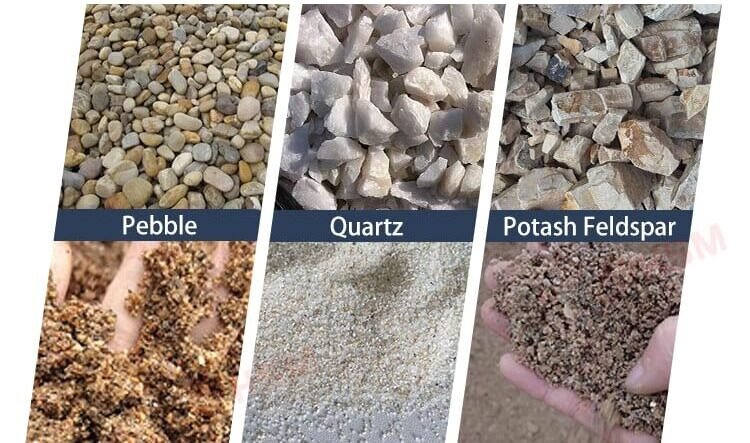
Diverse Mineral Samples Processed by HSM Double Roll Crushers
1. Comprehensive Overview of Applicable Materials
| Material Category | Material Characteristics | Primary Industry Applications |
|---|---|---|
| 1. Limestone | Typical brittle mineral; high crushing efficiency and uniform discharge. | Building materials, cement plants, aggregate quarries. |
| 2. Coal & Coal Gangue | High brittleness, easy to comminute; stable solid waste reduction. | Coal mines, washing plants, power plant fuel prep, solid waste recycling. |
| 3. Glass | Brittle material with adjustable output sizing for glass cullet recovery. | Glass recycling and secondary manufacturing plants. |
| 4. Calcite & Gypsum | Medium-soft minerals, serving as ideal raw feed for fine grinding. | Non-metallic mineral processing, cement raw material lines. |
| 5. River Pebbles & Cobblestones | Higher hardness requiring frictional nip force; excellent cubical sand shaping. | Manufactured sand production lines. |
| 6. Slag & Industrial Residue | High abrasive density; stable sizing for secondary aggregate recycling. | Solid waste treatment and metallurgical slag processing. |
| 7. Shale, Slate & Clay Blocks | Layered and brittle building materials. | Brick-making plants and ceramic raw material preparation. |
2. Handling High-Hardness Materials
High-hardness materials such as granite, basalt, and gold quartz ores can also be successfully processed using double roll crushers, provided specific engineering measures are met:
- Prioritize Wear-Resistant Configurations: Equip crushers with high-chromium alloy wear-resistant roller shells and hydraulic tramp relief systems to minimize surface abrasion and impact damage 【Custom Parameters Available】.
- Evaluate Operating Conditions: Higher material hardness increases shell wear rates and reduces hourly throughput; equipment model selection must be tailored to actual ore hardness indexes.
- Mandatory Sample Testing: High-hardness ores require pre-production laboratory testing to verify comminution efficiency and wear characteristics before finalizing plant design.

Working Principle of the Double-Roll Crusher
3. Three Golden Rules for Assessing Material Feasibility
- 1. Material Hardness: Medium-hard and brittle materials can be fed directly; high-hardness minerals require specialized wear packages and empirical trial validation.
- 2. Moisture & Viscosity: Excessive moisture causes material blinding and choking between rolls; high-clay feeds require specialized anti-clogging configurations and regulated feeding.
- 3. Feed Particle Size: Maximum lump size must fall within the roller nip intake limits; oversized run-of-mine feed must first pass through a primary jaw crusher.
4. Unsuitable or Cautionary Materials
- Construction Waste Containing Steel Rebar: Uncrushable metal debris severely damages roller shell faces; mandatory magnetic iron separation must precede the crushing stage.
- Extreme High-Moisture Sticky Clay: High plasticity causes material packing between rolls; specialized scraping and anti-plugging designs are required 【Custom Parameters Available】.
- Oversized Run-of-Mine Boulders: Massive rocks exceeding intake nip dimensions cause feeding slippage and overloads; primary jaw or hammer crushers must precede the double roll unit.
Unsure If Your Material Can Be Processed by a Double Roll Crusher?
Huashengming Heavy Industry offers professional material testing services to analyze your mineral sample’s hardness, moisture, and crushability 【Custom Parameters Available】.
Contact HSM engineers today to arrange a free raw material sample trial run and receive an accurate equipment configuration proposal.