



Q1: How long do the roller skins last?
A: The service life depends on the material hardness and the roller’s alloy composition. At HSM, we use high-chromium manganese steel or tungsten carbide studs (HRC 58-62). For standard river pebbles, our rollers typically last 2,000 to 4,000 hours. We also offer customized wear-resistant coatings for extremely abrasive iron ore.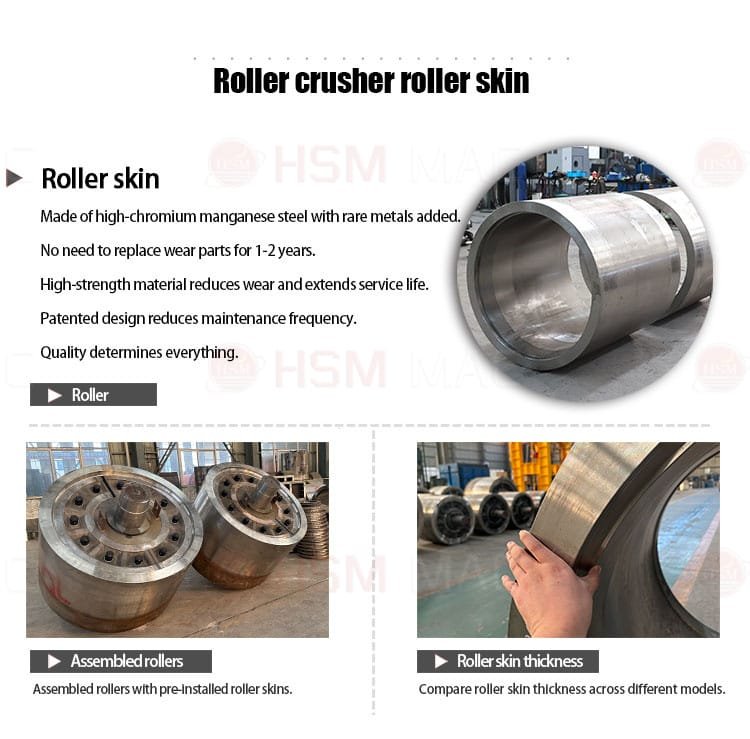
Q2: Can the roller crusher handle wet or sticky materials?
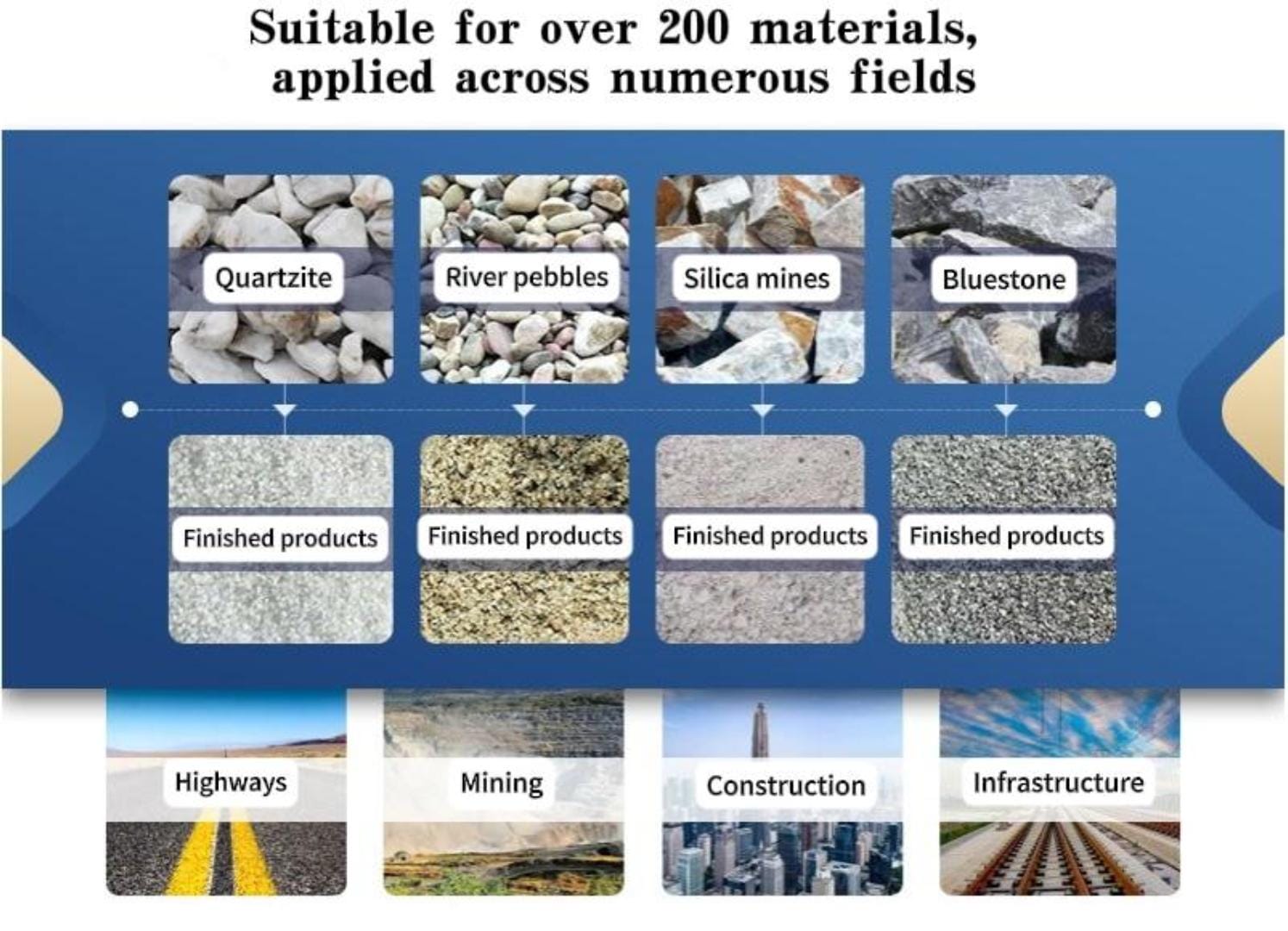
A: Yes! This is one of the biggest advantages of the double roller crusher. Unlike hammer mills or cone crushers, it has no screen at the bottom. It can effectively process materials with a moisture content of up to 30% without clogging, making it ideal for the rainy season.
Q3: How do I adjust the discharge particle size?
A: The particle size is controlled by the gap between the two rollers. On our Hydraulic Models, you can adjust this gap in seconds via the intelligent control panel or hydraulic pump. For Mechanical Models, it is adjusted by adding or removing shims behind the spring housing.
Q4: What is the difference between a Double Roller and a Four Roller Crusher?
A:
- Double Roller: Best for single-stage crushing where the reduction ratio is moderate (e.g., 50mm to 5mm).
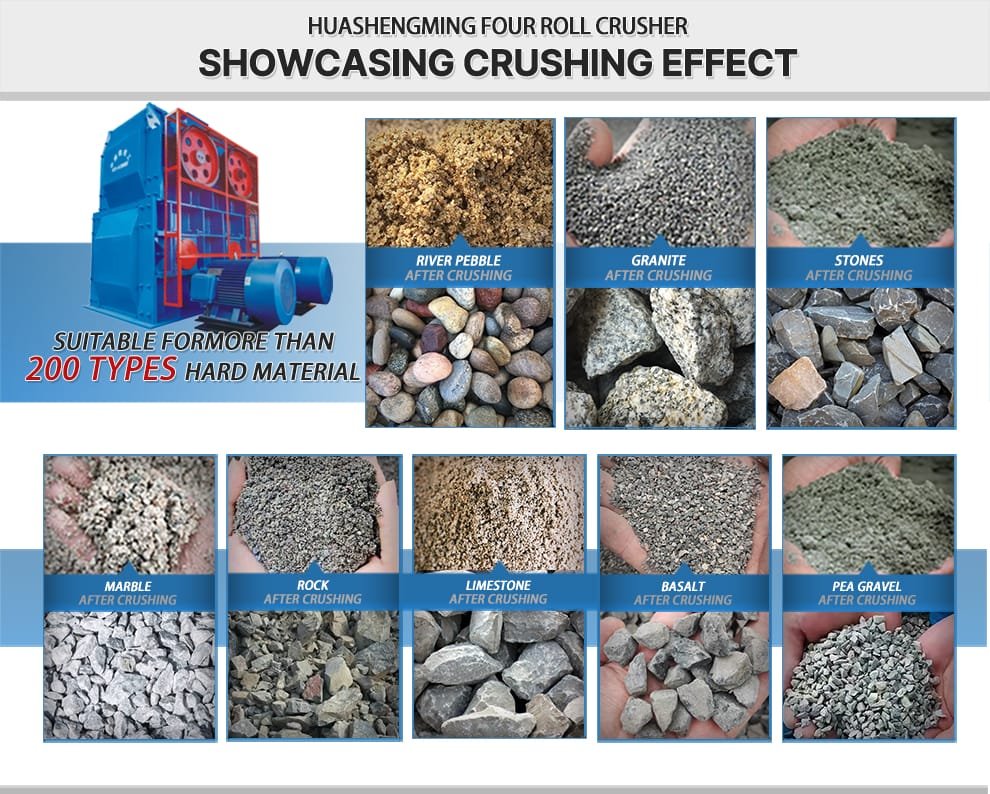
- Four Roller: Features a dual-cavity design (upper for medium, lower for fine). It is better for a high reduction ratio in one pass (e.g., 90mm directly to 3mm) and produces even more uniform particles.

Q5: How do I prevent damage from tramp iron or uncrushable objects?
A: Our machines are equipped with an Automatic Hydraulic Protection System. When an unbreakable object (like a steel bolt) enters, the hydraulic cylinders instantly retract the rollers to let it pass safely and then reset automatically. This prevents shaft breakage and costly downtime.
Still have questions? Our technical team is ready to provide a customized solution for your specific mining project. Contact HSM Customer Service today!