


Since 1806, roll crushers have been indispensable in mining, construction, and industrial processing. With simple structures, low energy consumption, and uniform particle output, they crush materials via compression, shear, or impact between rotating rollers. Below is a concise breakdown of key types—focusing on hydraulic roller and double tooth roller crushers.
Core Classifications of Roll Crushers
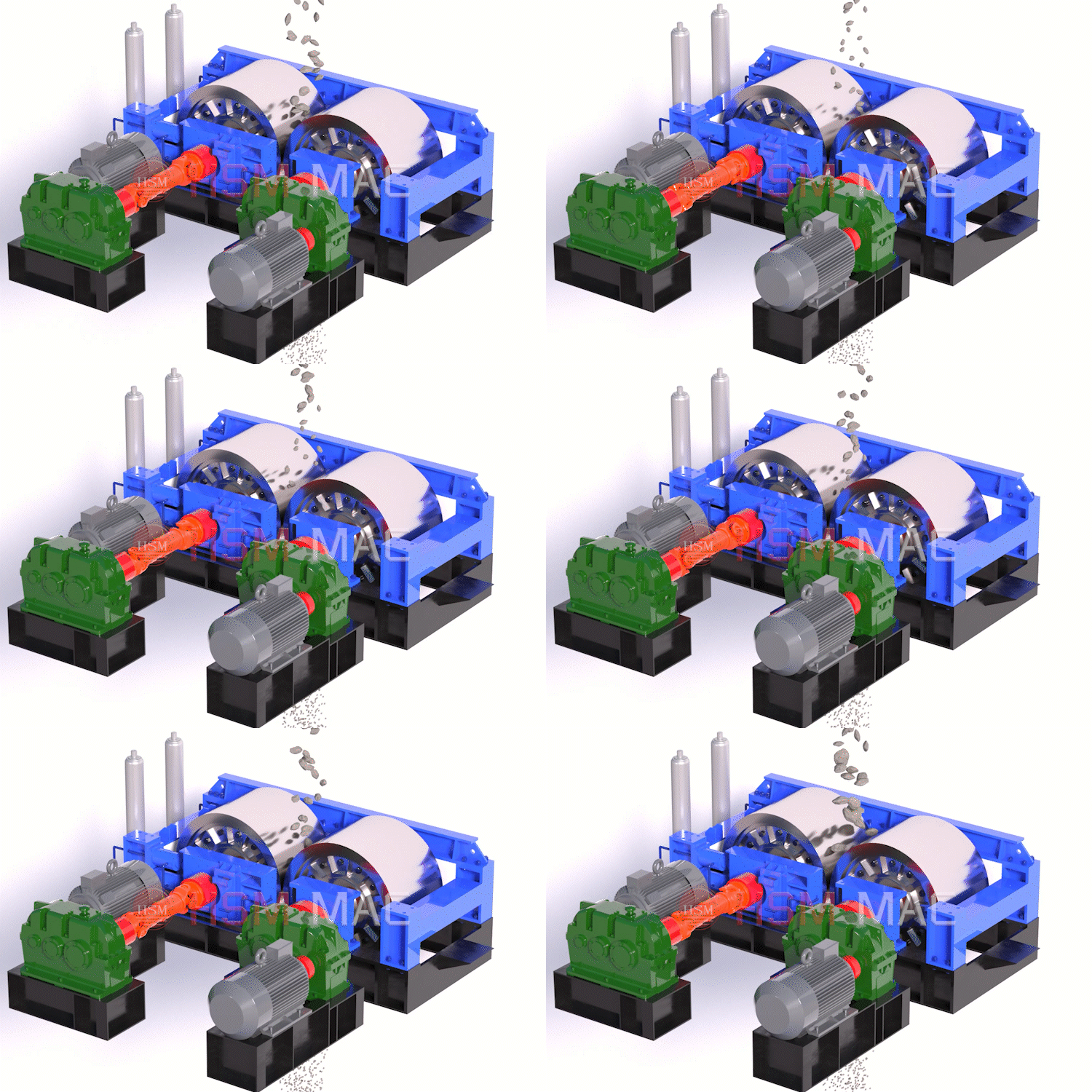
Working Principle
1. By Number of Rollers
Single-Roll Crushers: 1 rotating toothed roller + fixed plate. Ideal for primary crushing of medium-soft materials (coal, shale); handles feed up to 500mm, crushing ratio 6:1. Advantages: simple structure, high temp resistance, low power use.
Double-Roll Crushers (Twin-Roll): Most widely used. Subtypes:
Smooth Roll: Medium-fine crushing of brittle materials (limestone, quartz); 0.3–20mm output via compression.
Double Tooth Roller: Intermeshing teeth for hard/sticky materials (coal gangue, construction waste); 10–300mm output, minimal fines.
Multi-Roll Crushers:
Triple-Roll: Combines primary/secondary crushing (10:1 ratio); suitable for coal, salt, glass.
Four-Roll: Two double-roller sets in series; 0.2–10mm fine output for iron ore, coke.
2. By Adjustment & Protection
Mechanical Roll Crushers: Spring-based gap adjustment/overload protection; cost-effective for stable, low-budget operations.
Hydraulic Roller Crushers: Hydraulic systems for precise gap control (1–20mm) and automatic tramp relief. Ideal for complex conditions (variable feed, high moisture).
Spotlight: Hydraulic vs. Double Tooth Roller Crushers
Hydraulic Roller Crushers
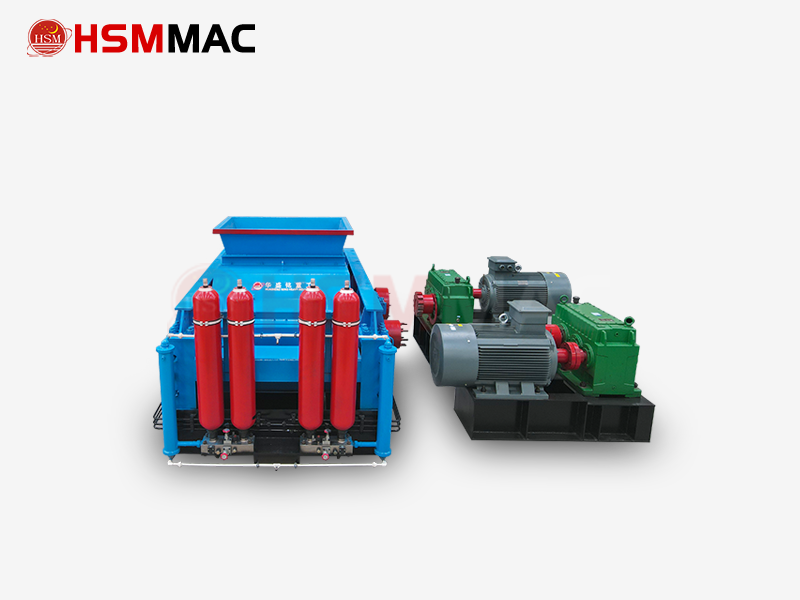
hydraulic roller crusher
Core Design: Hydraulic cylinders + smooth/welded rollers.
Key Advantages: ±0.1mm gap precision, 30–150 t/h capacity, 50% longer wear life, handles ≤35% moisture (no clogging).
Applications: Medium-fine crushing of limestone, cement clinker (≤250 Mpa compressive strength).
Double Tooth Roller Crushers
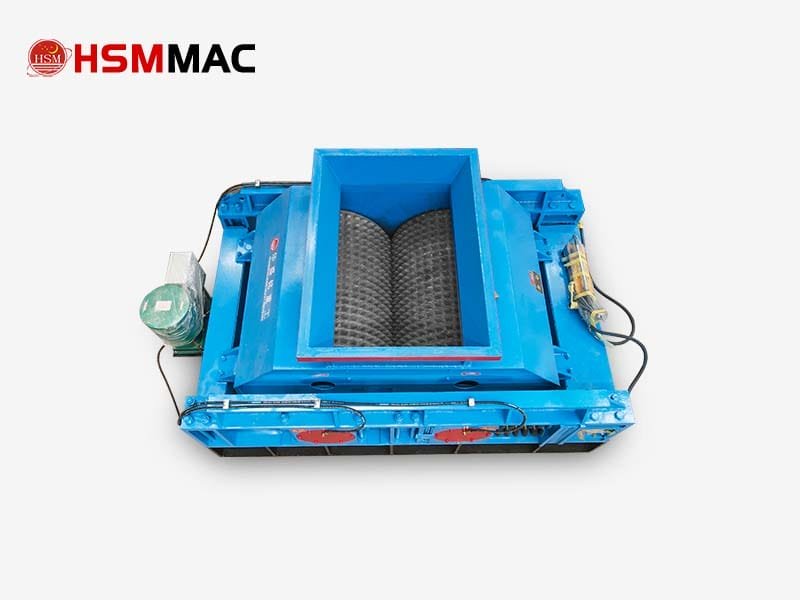
Double Tooth Roller Crushers
Core Design: Interlocking alloy steel teeth, V-shaped chamber, adjustable speed.
Key Advantages: 10–15:1 reduction ratio, low over-crushing, handles 80–1050mm feed. Dual overload/iron protection.
Applications: Coarse/medium crushing of coal gangue, granite (≤160 Mpa compressive strength).
How to Choose the Right Roll Crusher?
Material: Hardness (≤160–300 Mpa), moisture (≤15–35%), feed size.
Output: Particle size (0.2mm–300mm), fines tolerance.
Operations: Automation needs, maintenance frequency, budget (hydraulic = higher upfront cost, lower downtime).