


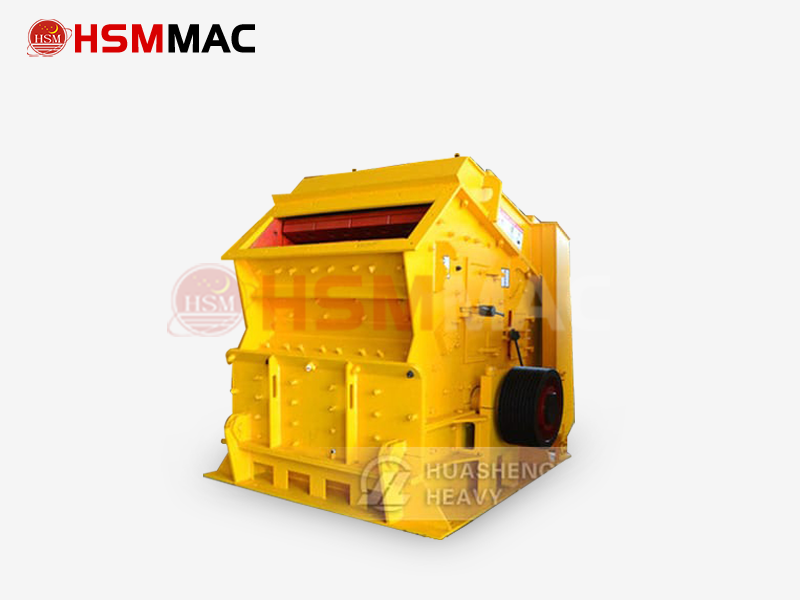
The impact crusher is a crucial piece of equipment in the mining and building materials sectors, with its core crushing function stemming from the synergistic effect of high-speed impact and collision. After entering the crushing chamber, materials are propelled towards the impact plate or lining plate by the high-speed rotating rotor, resulting in intense impact and rebound. During this process, stress concentration within the materials induces cracks that rapidly propagate, ultimately causing the materials to fracture along weak planes and achieve efficient crushing.
Impact Crusher: The Core Force for Efficient Crushing
Its crushing mechanism involves two main actions: First, the kinetic energy impact directly imparted to the materials by the rotor, which enables the materials to acquire sufficient crushing energy through high-speed projection; second, the mutual collisions and friction among materials, which result in secondary crushing and further refine the particle size. This composite action mode of “impact + collision” allows the equipment to maintain high crushing efficiency and low energy consumption when handling hard materials such as granite and basalt.
Compared to traditional compression-type crushers. The impact crusher significantly enhances the uniformity of the finished particle shape through its dynamic crushing process, reducing the content of needle-like and flaky particles and meeting the stringent requirements for aggregate particle shape in high-end building materials. Meanwhile, its modular design facilitates adjustments to rotor speed and the gap between the impact plates, enabling flexible adaptation to the crushing needs of different materials. As a result, it has become a core piece of equipment in fields such as sand and gravel aggregate production and metal ore processing.