


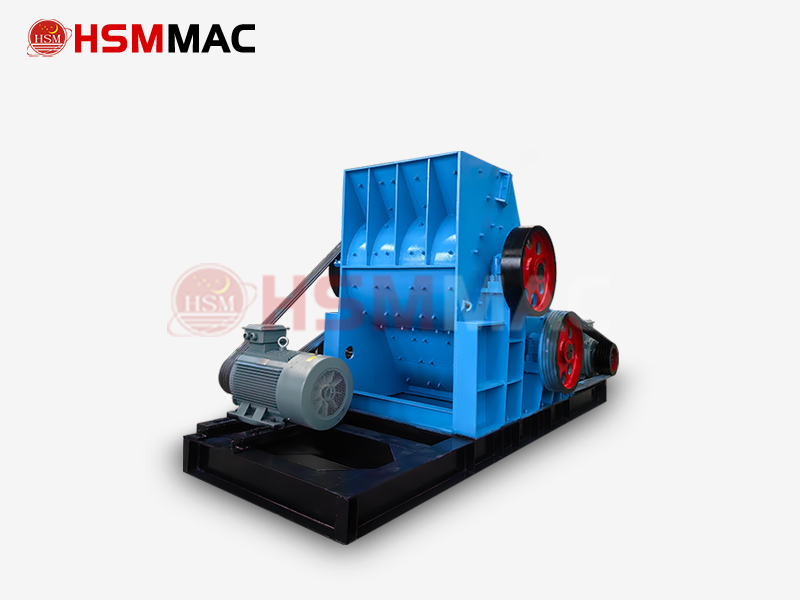
As a key equipment in the crushing field. The double-stage crusher has become the preferred choice for industries such as construction materials, mining, and chemical engineering. Thanks to its unique dual-cavity crushing structure. Its core design breaks through the limitations of traditional single-stage crushing: through the coordinated operation of two-stage rotors, it achieves gradual refined crushing of materials, significantly improving crushing efficiency and finished product quality.
Double-Stage Crusher: Core Equipment for High-Efficiency Crushing
During operation, materials enter the primary crushing cavity through the feed inlet and are crushed by the high-speed rotating rotor hammers. The initially crushed materials then fall into the secondary crushing cavity. Where deep crushing is completed through secondary extrusion and impact. ultimately forming finished products with uniform particle size. This double-stage crushing mode effectively avoids material clogging issues, with a crushing ratio of 10-20, capable of directly crushing large materials to below 3-5 millimeters, meeting the processing needs of various industries.
Compared with traditional crushers. The double-stage crusher offers distinct advantages: adopting wear-resistant alloy hammers and thickened liners. Its service life is extended by over 30%. The sealed design reduces dust pollution, complying with environmental protection standards; it features a compact structure with a small footprint, facilitating easy installation and maintenance, and its energy consumption is 15%-20% lower than that of single-stage equipment.
Currently, this equipment is widely used in the crushing processing of materials such as gangue, shale, construction waste, and limestone. It plays a crucial role in scenarios like brick-making, sand-making, and cement production. Providing reliable support for industries to reduce costs, improve efficiency, and achieve green development.